Tesla and SpaceX formed merger committees. Musk backed the idea
The proposed combination would bring two companies with expanding artificial intelligence ambitions into a closer corporate arrangement, if their independent directors agree.
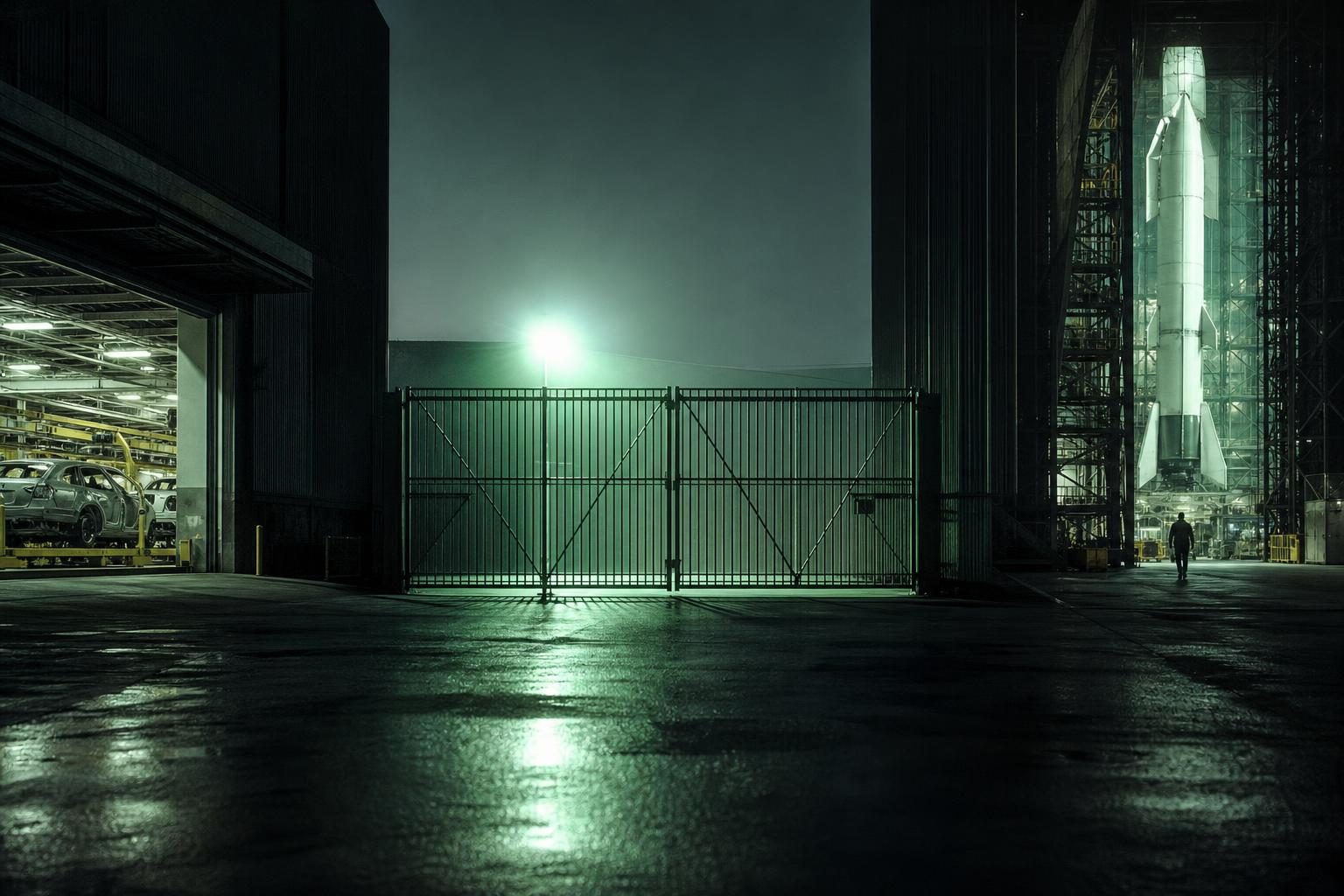
Tesla and SpaceX are already closer than a normal pair of companies
Tesla and SpaceX formed special committees to discuss a possible merger, while Elon Musk publicly backed the idea.
It landed as a corporate event with a familiar promise attached: put more machinery, more data and more ambition under one roof, then call the resulting scale a strategy.
For a small operator, that can sound distant. It isn’t entirely.
A gym, restaurant or retailer already depends on connected systems: the booking page, customer messages, payments and follow-up. When a large company tries to bind its assets closer together, it is testing the same basic proposition at a vastly different scale.
The tension is ownership.
The special committees now discussing a possible combination
Yahoo Finance reported that Musk said Tesla and SpaceX had each formed special committees to discuss the merger idea, with independent directors on those committees.
Musk said, “I think both SpaceX and Tesla have formed special committees to discuss this idea,” according to Yahoo Finance.
He also said he could not participate in the committees’ discussions because he was a conflicted party, Yahoo Finance reported.
The BBC reported that shareholders would ultimately decide on a merger, and that half of Tesla’s shareholders would need to support it. The BBC also reported that Musk described that threshold as “quite a high hurdle.”
The proposed transaction is not certain, according to the BBC.
The Wall Street Journal reported that Tesla and SpaceX have expanded beyond their core operations toward a shared mission centred on artificial intelligence.
That last point matters more than the committee process.
Musk’s AI ambition is the point, not the corporate paperwork
A merger committee is a corporate mechanism. It can produce terms, reject them, or sit in meetings until the appetite disappears. It is not proof that two companies will become one.
But it is evidence of a bet.
The bet is that the advantage does not sit inside one product, one data source or one customer channel. It sits in the connections between them. That is why the story belongs on the desk of an operator who has a booking system that doesn’t speak to a WhatsApp inbox, or a customer list that never reaches the person answering calls.
We think the corporate-merger spectacle is the part to ignore.
The useful part is the willingness to treat disconnected assets as a strategic weakness rather than an annoying administrative detail. A business can be busy all week and still lose the useful information created by every enquiry, cancelled appointment and repeat purchase.
That problem doesn’t need rockets.
It needs clearer routes between the places where customers first show interest and the places where somebody responds. How Stopping Revenue Leaks Can Boost Your Profits is useful here because the leak is often ordinary: an unanswered message, an unrecorded call, or a booking that never receives a reminder.
We do not know whether the committees will agree on transaction terms.
And we don’t need to know that before noticing the logic behind the attempt.
The independent directors hold the real decision
Big companies can gather assets through a merger. Small companies have to connect what they already own.
That work is less glamorous.
This one does not change what you do this week, here is why it is still worth knowing: the proposed combination is a signal about control, not a new tool you can switch on.
The paperwork can wait.
Your customer journey cannot.
What a Bali operator should take from a bigger connected stack
The Tesla SpaceX merger is not a reason to redesign everything. It is a prompt to find where a customer’s intent gets stranded between one surface and the next.
You may resist this because it sounds like an admin project, and because the gaps are easier to tolerate when staff are handling them by memory. That is precisely why the exercise is worth doing on a quiet Friday afternoon. Memory works until somebody is sick, busy, new, or simply misses the message.
Make four small checks this week:
- Open your booking page and submit one test enquiry. Write down where it lands, who sees it, and what happens if nobody replies before closing time. If you cannot name that route, a real lead can disappear without anyone noticing.
- Read the last ten WhatsApp enquiries beside your booking system. Look for messages that asked a question but never reached a confirmed booking, payment or follow-up. If you skip this, you will keep calling every lost booking “not serious” without knowing whether the customer simply received no next step.
- Check your Google listing as if you were a first-time customer. Confirm that the phone number, opening details and booking route lead to the same place your staff actually monitor. If those paths differ, a customer can do exactly what you asked and still hit a dead end.
- Choose one repeatable hand-off between a person and an AI assistant, such as drafting a reply after a missed call or preparing a reminder before an appointment. Keep approval with a person at first. If you skip that boundary, speed can become a way of sending the wrong answer faster.
None of this requires a developer. It requires a plain answer to a plain question: where does this customer go next?
That answer is the beginning of useful automation, not the final polish. Speed to Lead Australia: Turn Enquiries Into Bookings Faster explains why the first response deserves more attention than a complicated campaign built weeks later.
And don’t confuse connection with surrender. Your CRM, booking system and customer messages should make it easier to see the customer journey, not make it impossible to leave a platform when the relationship stops serving you.
Watch whether the committees produce terms or walk away
Watch for one specific signal: whether the special committees produce transaction terms for shareholders.
That would show the merger has moved beyond Musk’s endorsement and into a proposal that independent directors are prepared to put in front of owners.
If no terms emerge, the story remains a public expression of ambition rather than a completed corporate move.
Either outcome is useful.
A deal would show that the companies want tighter control over their connected assets. A retreat would show that even companies with shared leadership and broad ambitions can find the cost of combining systems too high.
We’d watch the hand-off from idea to terms, not the noise around it.
Frequently asked
Is the Tesla SpaceX merger confirmed?
No. Yahoo Finance and the BBC reported that special committees are discussing the idea. The proposed transaction is not certain.
What are Tesla and SpaceX special committees?
Yahoo Finance reported that both companies formed committees made up of independent directors. The committees are discussing the merger idea.
Why does a possible merger matter to small businesses?
It highlights the value placed on connecting systems and assets. Small businesses can review whether their booking, messaging and customer records connect clearly.