Four AI companies faced New York City Council questions on risk
Four major labs sent policy and safety leaders to a city council hearing, putting scrutiny of artificial intelligence in public view.
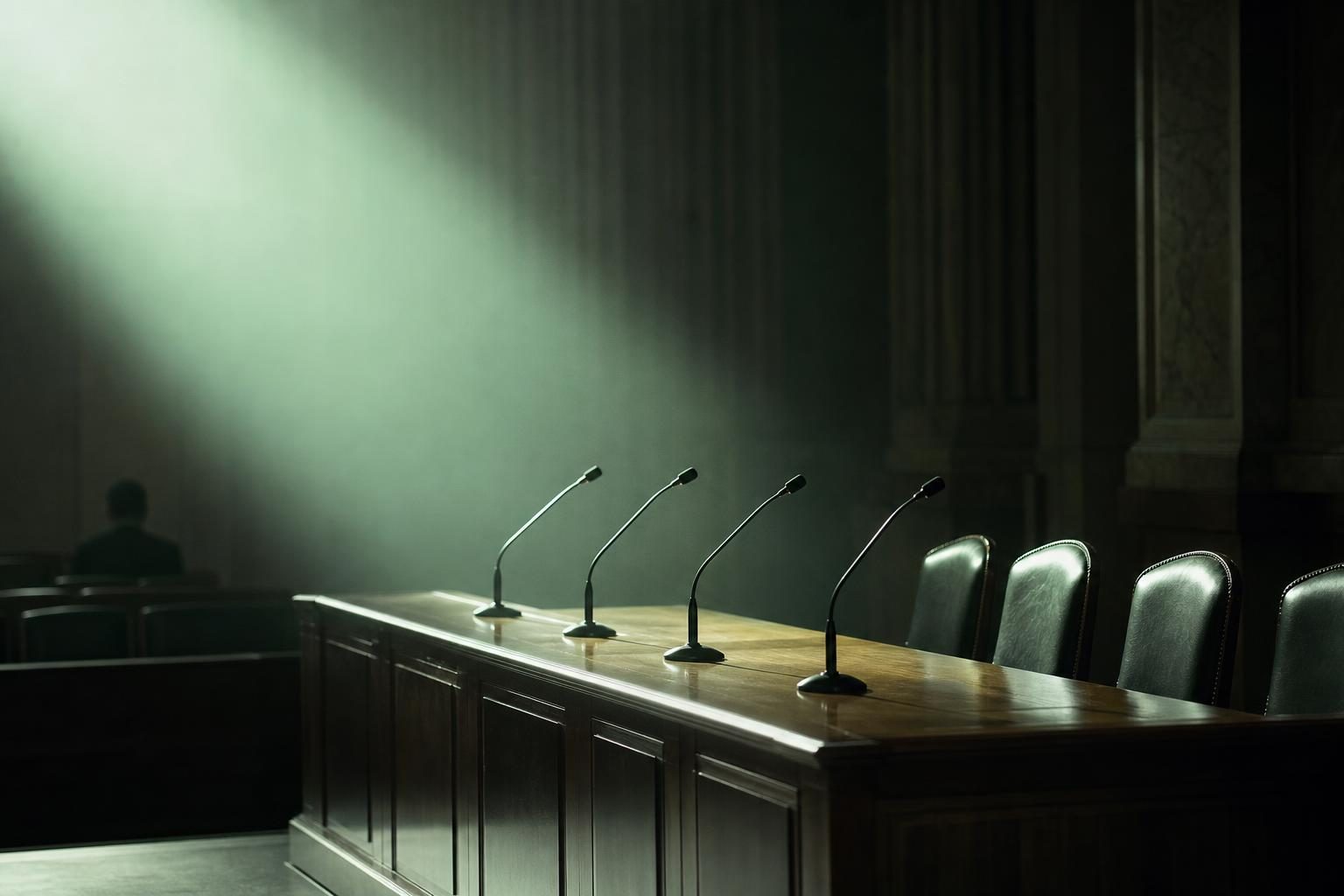
Four AI companies went before the New York City Council
OpenAI went before the New York City Council with Anthropic, Google and Meta on October 5, CNBC reported Monday. It was a civic hearing, not a product launch, and that distinction matters.
A hearing won’t change the reply someone receives from your front desk this morning. It can, however, change the tone around automated replies, customer data and the promises a company makes about what its systems can do.
For a small operator, the useful question isn’t whether the testimony was dramatic. It is whether you could explain your own automated customer journey without guessing.
The questions are now public.
What CNBC and Quartz reported from the hearing
CNBC reported that Anthropic sent Logan Graham, its head of Frontier Red Team, to testify at the New York City Council hearing. CNBC also reported that OpenAI was represented by Morgan Dwyer, the company’s head of policy development and operations, while Google sent Alice Friend, its director of AI and emerging technology policy.
CNBC reported that OpenAI, Anthropic, Google and Meta were appearing as scrutiny of AI safety and security practices increased.
Quartz reported that the hearing came amid mounting concern about AI safety. Quartz also reported that current and former researchers at OpenAI and Google DeepMind warned the previous week that AI companies were moving too fast toward self-improving systems that could outpace human control.
Bushwick Daily reported that Menin said companies owed it to the public to testify under oath, citing what Menin called the high stakes of rapidly advancing AI. Quartz reported that the Federal Trade Commission had confirmed an investigation, though its article did not identify the outcome.
Why OpenAI, Anthropic, Google and Meta appearing together matters
But a hearing is not a rule, and it is not proof that a small business must rebuild its customer communications this week.
We think the public theatre is the part to ignore. Four large companies appearing in one room makes a strong image, but the useful issue is much more ordinary: whether a business can describe what an automated message does, what information it uses, and where a person takes over.
That standard is not glamorous. It is also easier to meet before something goes wrong.
We do not know whether the hearing will produce a city requirement, a timetable, or nothing beyond the testimony. That unknown matters because it separates a political moment from a deadline. Don’t manufacture a deadline where none has been stated.
There’s a tempting response to stories like this: stop experimenting until the big companies and public bodies settle the argument. That would confuse caution with paralysis. A booking confirmation, a missed-call reply, or a basic enquiry triage system can still be useful when its boundaries are clear.
The better instinct is to keep the work legible. How Smart Systems Can Transform Your Business and Free Up Your Time is useful here because a system should free time without becoming a black box that nobody on the team can explain.
The hearing put AI risk on a public record
So the industry conversation has moved into a public chamber.
Your floor is smaller.
It still has customers, messages and expectations.
The event does not create a new capability for you. It does make vague automation look less defensible. If a customer asks who sent a message, what happens next, or how to reach a person, your answer shouldn’t depend on whoever built the workflow months ago.
That is the turn.
Why this does not change your booking page this week
This one does not change what you do this week, here is why it is still worth knowing: the hearing did not create a stated deadline or ship a new tool. It does offer a timely reason to inspect the automated surfaces that already speak for you.
You probably won’t do this because the week is already full. There are staff shifts, supplier messages, class changes, stock questions and the kind of small interruptions that make a one-hour review feel optional. But unclear automation creates its own interruptions later, usually when a customer is already annoyed.
Use one quiet block on your Friday afternoon for three checks.
- Open your booking page and submit the same enquiry a new customer would send. Read the confirmation, any follow-up message and the cancellation wording in order. If you skip this, you may not notice that the journey promises a response, a slot or a next step that nobody is actually monitoring.
- Read your WhatsApp conversation flow from the customer’s side. Mark the point where an automated reply stops and a staff member must respond, then make sure the handover language is plain. If you skip it, a customer can be left talking to a system that sounds confident but cannot solve the actual question.
- Check your Google listing against what your staff would say today about opening hours, location, booking method and contact route. If you skip it, the customer may arrive through one version of your business and meet another at the door.
None of this requires a developer. It also doesn’t require adding an AI assistant simply because the largest companies were questioned in public. Keep the systems you can explain, and pause the ones that make claims you cannot verify.
We won’t pretend this is exciting work. It is the kind that prevents a small mismatch from becoming a public complaint, a refund request or a staff argument over who was meant to reply.
If the problem is not the messages themselves but the amount of manual follow-up behind them, How Automation Can Save You 13 Hours Every Week is the more relevant next read. The point is not to automate every conversation. It is to decide which conversations deserve a reliable route and which need a person immediately.
Watch what the council asks the companies to do next
Watch for a specific request that follows the testimony: a stated requirement, a date, or a formal demand for disclosure.
That is the signal that this mattered beyond one hearing.
Also watch whether the companies respond with clearer descriptions of how their systems are governed, not simply broader claims about safety. If that happens, smaller operators will have a practical model for explaining their own customer-facing automation.
Until then, keep the distinction clear. Public scrutiny is not a reason to freeze. It is a reason to know what is already speaking in your name.
Frequently asked
What happened at the NYC AI hearing?
CNBC reported that OpenAI, Anthropic, Google and Meta testified before the New York City Council on October 5. CNBC reported that the hearing focused on increased scrutiny of AI safety and security practices.
Who represented OpenAI at the hearing?
CNBC reported that Morgan Dwyer represented OpenAI. CNBC described Dwyer as the company’s head of policy development and operations.
Did the hearing create new rules for small businesses?
The sources in the research digest describe testimony and scrutiny, not a stated new rule for small businesses. Quartz reported that the hearing occurred amid mounting concern about AI safety.