Geoffrey Hinton's Legacy: What Business Leaders Can Learn
How Geoffrey Hinton's journey in AI offers valuable insights for today's business leaders.
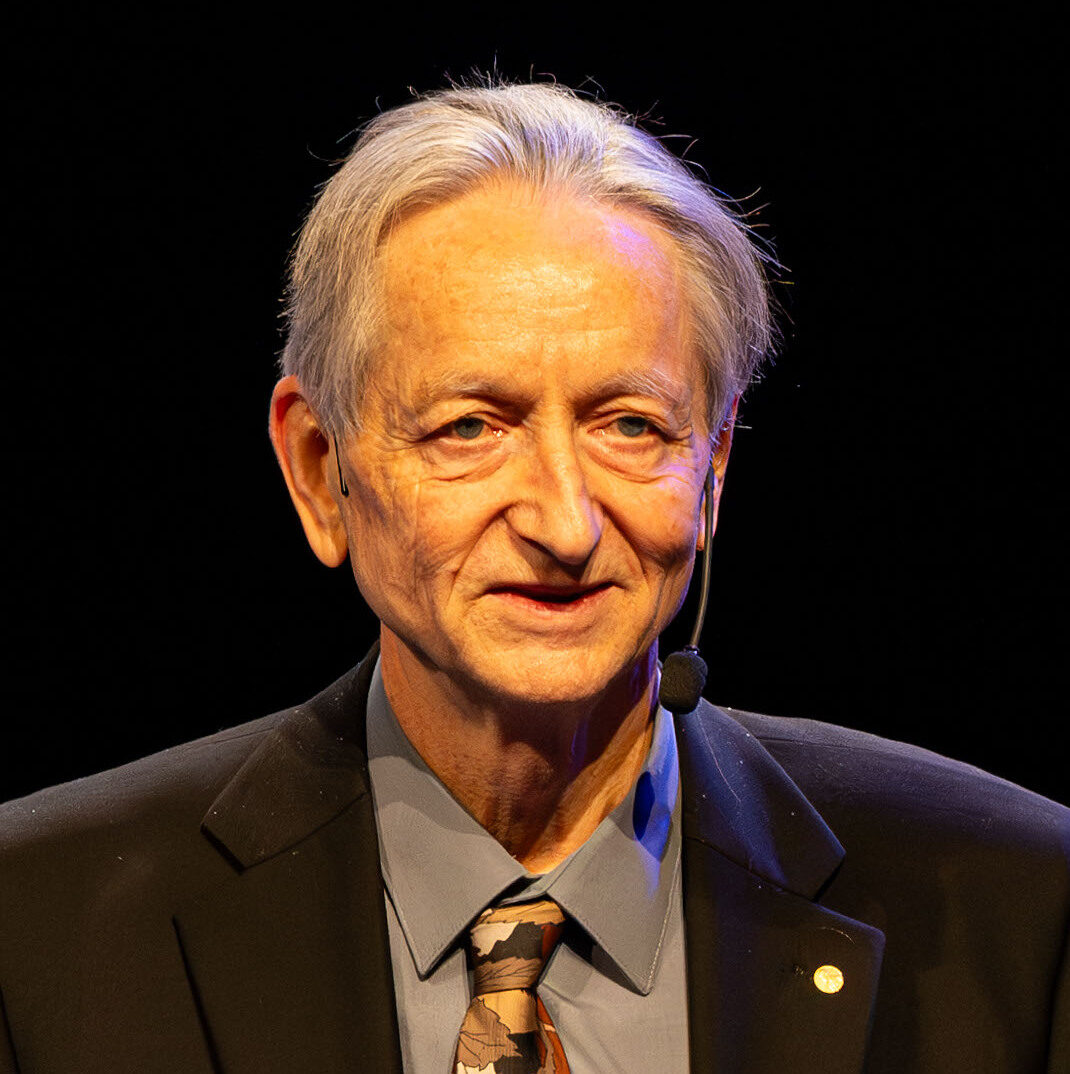
The Early Days: Belief Against the Odds
In the 1970s and 80s, the concept of training machines to think was largely dismissed as a dead end. Geoffrey Hinton, however, saw potential where others saw futility. His persistence in developing artificial neural networks laid the groundwork for modern AI, despite widespread skepticism. This teaches us an important lesson: sometimes, innovation requires believing in your vision even when others do not.
Breakthrough with Backpropagation: A Turning Point
In 1986, Hinton, alongside David Rumelhart and Ronald Williams, popularized backpropagation, an algorithm that allows neural networks to learn from their mistakes. This development was crucial in advancing AI technology. For business leaders, this highlights the importance of foundational work and incremental improvements, which can lead to groundbreaking results over time.
The 2012 Revolution: Deep Learning Takes Center Stage
Everything changed in 2012 when Hinton and his students, Alex Krizhevsky and Ilya Sutskever, introduced AlexNet. This neural network outperformed competitors in the ImageNet contest, sparking a deep learning revolution. This moment underscores the power of proof-of-concept and the impact a single breakthrough can have on an entire industry.
A Decade with Google: Scaling New Heights
Google's acquisition of Hinton's company in 2013 marked a new chapter. Over the next decade, Hinton reached the pinnacle of his career, sharing the Turing Award in 2018. His journey with Google exemplifies how strategic partnerships can propel innovation and scale achievements.
The Warning: Why Hinton Walked Away
In 2023, Hinton left Google to freely express concerns about AI's potential dangers. He worries that machines could surpass human intelligence and slip beyond our control. This serves as a cautionary tale for businesses: innovation must be coupled with responsibility and foresight.
The Nobel Twist: Recognition and Reflection
In an unexpected turn, Hinton was awarded the Nobel Prize in Physics in 2024 for the very neural network foundations he now warns about. This recognition reflects the dual nature of technological advancements, they are both powerful and potentially perilous. For business leaders, this highlights the need for ethical considerations in tech development.
Lessons for Business Leaders: Balancing Innovation and Responsibility
Hinton's journey offers valuable lessons: believe in your vision, nurture foundational innovations, leverage strategic partnerships, and approach technology with ethical responsibility. As businesses integrate AI, they must balance progress with the potential risks inherent in these powerful tools.
Frequently asked
Who is Geoffrey Hinton?
Geoffrey Hinton is a pioneering figure in artificial intelligence, known for his work on neural networks and deep learning.
What is backpropagation?
Backpropagation is an algorithm that allows neural networks to learn from mistakes by adjusting weights, crucial for modern AI systems.
Why did Geoffrey Hinton leave Google?
Hinton left Google to speak freely about the potential dangers of AI without impacting the company's reputation.
What is the significance of AlexNet?
AlexNet was a groundbreaking neural network that won the ImageNet contest in 2012, igniting the deep learning revolution.
Why is AI considered potentially dangerous?
AI is seen as potentially dangerous because machines could surpass human intelligence and become uncontrollable.